

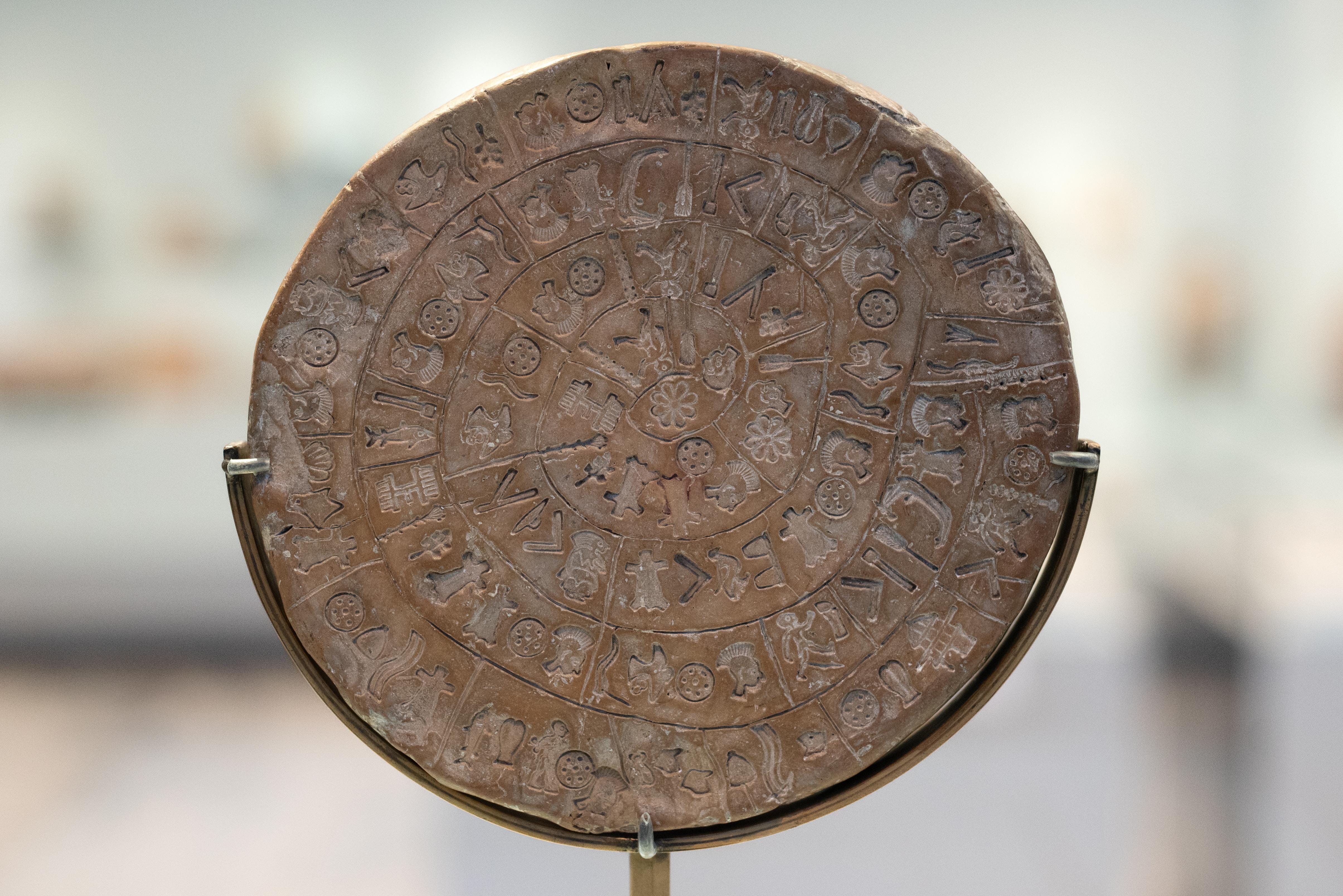
One of the most famous unsolved archaeological mysteries from ancient Europe is a small clay object known as the Phaistos Disc.
Created nearly 4,000 years ago, this disc is covered with mysterious symbols that no one has been able to decipher.
Although it is only about 15–16 centimeters (6 inches) in diameter, this small artifact may hold clues to a forgotten part of the ancient Minoan civilization.
But what exactly does it say, and what secrets has it kept hidden for thousands of years?
A Small Disc with a Big Mystery
The Phaistos Disc was discovered in 1908 at the ancient site of Phaistos on the island of Crete, Greece.
It is believed to date back to around 1700–1600 BCE.
At first, the disc may look like just another ancient artifact. But when archaeologists took a closer look, they found something truly fascinating.
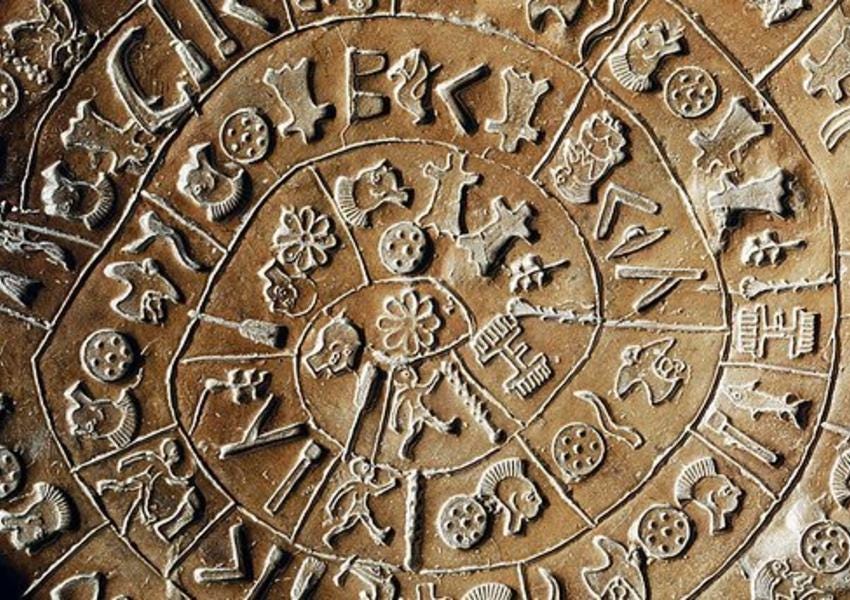
The disc contains 241 stamped symbols made up of 45 different symbol types. The symbols are arranged in a clockwise spiral, and the disc has writing on both sides.
You probably noticed one thing... I mentioned stamped symbols.
Unlike most ancient tablets, these symbols were not carved by hand.
Instead, each symbol was pressed into the clay using a separate stamp before the disc was fired.
This has led some researchers to wonder whether it could be one of the earliest known examples of a form of movable-type printing—although not printing in the modern sense.
Now let’s look at the symbols themselves. They depict people, birds, fish, plants, shields, helmets, tools, and other objects.
And that’s it... we don’t know much more than this.
Because this is the only known example of this writing system, it’s incredibly difficult to understand what it actually says.
So this is where the theories begin.
Some believe it is a religious hymn. Others think it had an astronomical purpose. Some suggest it was a legal or administrative document, while others believe it could have been a game or puzzle used for entertainment.
But what does it really mean?
Well... we simply don’t know.
More than 3,500 years later, the Phaistos Disc remains one of archaeology's greatest mysteries, reminding us how a single small object can preserve secrets from an entire civilization.
So, as long as the Phaistos Disc remains undeciphered, it continues to hold on to one of the greatest mysteries of the Minoan civilization.
Stay Curious,
Ancient Explain
If you enjoy what we do and would like to support our work, please consider supporting us here.
For Ancient Lovers !
If you'd like to explore the Indus Valley Civilization beyond just Harappa and Mohenjo-daro then Explore our Indus Valley Guide, featuring 10 lesser-known Harappan sites.
Learn about their history, archaeological discoveries, enduring mysteries, leading theories, and the factors that shaped their rise and eventual decline—all in one beautifully organized guide.
Get your copy here.
Very curious indeed.
Anyone sees the saucer shape on the top right, second pass of the spiral? (close-up picture)